You Won’t Believe These Hidden Views in Hagåtña – My Guam Adventure Unfolds
Have you ever stood somewhere and felt like you were seeing a place for the very first time—through fresh eyes? That’s exactly what happened when I arrived in Hagåtña, Guam. Far from just a dot on the map, this quiet capital surprised me with its layered beauty, where ocean meets history and culture breathes through every street corner. If you're looking for the real Guam—not just beaches, but perspective—I’ll show you the spots that changed how I see this island forever.
Arrival in Hagåtña: First Impressions That Defy Expectations
As the rental car turned off Marine Corps Drive into the heart of Hagåtña, the landscape shifted subtly but meaningfully. Gone were the high-rise resorts and neon-lit shopping strips of Tumon; in their place stood a modest cityscape where pastel-painted government buildings stood shoulder-to-shoulder with century-old Catholic churches and family-run bakeries. The air carried a salt-kissed breeze, mingled with the faint scent of plumeria and grilled meat from a nearby roadside vendor. Church bells rang from the Metropolitan Cathedral of Dulce Nombre de Maria, their chimes echoing over quiet streets lined with banyan trees. This was not the Guam most visitors expect—but perhaps the one they need.
Hagåtña, the capital of Guam, is often overlooked in favor of the island’s more commercialized north. Yet stepping into its streets is like opening a well-kept diary of Chamorro life. Unlike the transient energy of beachfront hotels, Hagåtña pulses with a grounded rhythm—a place where elders greet each other by name, children walk home from school in crisp uniforms, and the Chamorro language flows naturally in conversations at the corner store. It is neither loud nor flashy, but its authenticity is immediate. For travelers seeking depth, this city offers a doorway into the soul of the island.
What makes Hagåtña such a powerful first impression is its ability to balance resilience with serenity. Though it has been rebuilt multiple times—especially after the devastation of World War II and repeated typhoons—the city carries its history without bitterness. Spanish colonial influences blend with American administrative structures and indigenous Chamorro traditions in a way that feels organic, not curated. The sidewalks may be cracked in places, and the buildings modest, but there is dignity in the way the city holds itself. Starting a journey here, rather than at the airport or a resort, allows visitors to see Guam not as a tropical escape, but as a living, evolving community.
Sensory details anchor this first experience. The rustle of palm fronds overhead, the distant cry of a fishing boat’s horn, the rhythmic clatter of a passing bus—all contribute to a soundscape that feels distinctly local. The pace is slower, the eye drawn not to billboards but to hand-painted signs in both English and Chamorro. Even the sunlight seems different here—filtered through wide tropical leaves, casting dappled patterns on weathered stone walls. To arrive in Hagåtña is to begin a journey not just across geography, but through time and culture.
The Waterfront Perspective: Where History Meets the Horizon
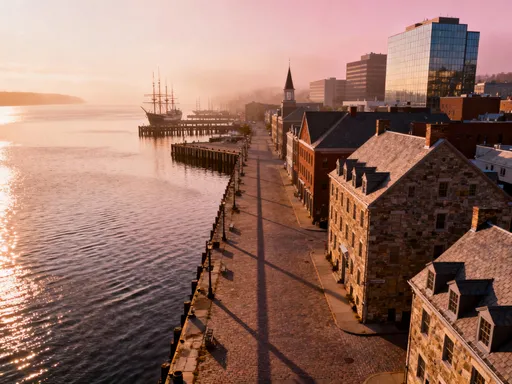
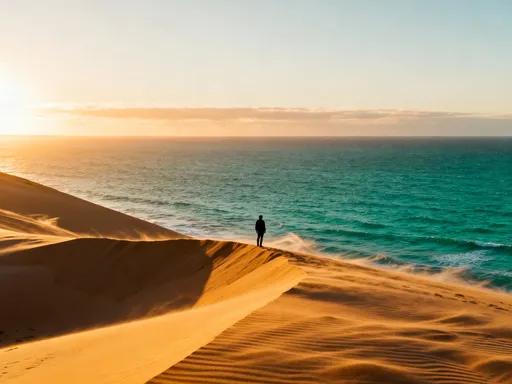
No understanding of Hagåtña is complete without standing at its edge, where land dissolves into the vast Pacific. Hagåtña Bay, though modest in size, has long served as a gateway to the island. Centuries ago, it welcomed the first Spanish galleons crossing the Pacific; today, it reflects the quiet dignity of a city that has seen empires rise and fall. From the shoreline, the view stretches uninterrupted—turquoise water deepening to cobalt as it meets the horizon, framed by distant ridgelines and the occasional silhouette of a fishing boat. This is not a dramatic cliffside vista, but a contemplative one, where stillness speaks louder than spectacle.
One of the most accessible and rewarding spots along the waterfront is Paseo de Susana, a seaside park that offers both shade and sweeping views. Benches line the promenade, inviting visitors to sit and simply watch the water. At low tide, small sandbars emerge, and local families often gather to stroll or fly kites. The park’s centerpiece—a stone monument honoring Guam’s governors—stands as a quiet reminder of the island’s political journey. But it’s the peripheral details that captivate: the way sunlight dances on the waves, the cry of terns diving for fish, the gentle lap of water against the seawall. These are the moments that etch a place into memory.
The bay’s historical significance cannot be overstated. As the primary port during Spanish and American colonial periods, it was the first sight of land for generations of sailors, missionaries, and settlers. Even today, the U.S. Coast Guard maintains a presence here, a subtle nod to Guam’s strategic role in the Pacific. Yet for all its past importance, the waterfront remains uncommercialized—free of tourist traps or overdevelopment. This authenticity makes it a rare gem: a place where history isn’t packaged, but lived.
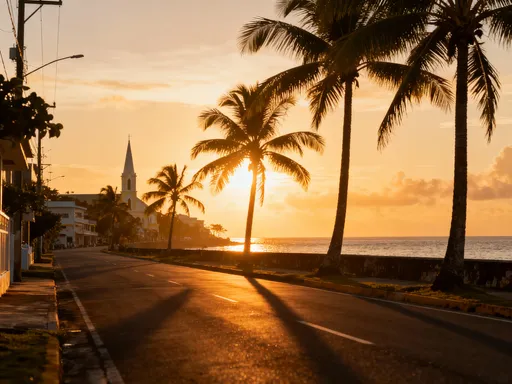
For those seeking a more personal connection with the water, early morning or late afternoon offers the best conditions. At sunrise, the bay glows in soft gold, with long shadows stretching across the pavement. By sunset, the sky ignites in hues of coral and lavender, mirrored perfectly in the calm surface. These are ideal times for quiet reflection, away from the midday heat. Visitors are encouraged to bring a notebook or camera, not to capture perfection, but to preserve feeling. The waterfront of Hagåtña does not demand attention—it rewards those who pause to listen.
Elevated Vistas: Finding Height in a Low-Lying Capital
At first glance, Hagåtña appears flat, its skyline defined more by church steeples than skyscrapers. Yet for those willing to seek them, subtle elevations offer rare and revealing perspectives. The most accessible of these is the bell tower of the Dulce Nombre de Maria Cathedral, which—while not officially open to the public—can be appreciated from the adjacent plaza, where the ground slopes gently upward. From this vantage, the city unfolds in layers: red-tiled roofs, swaying palms, and the shimmering ribbon of the bay. It’s a view that transforms the familiar into something almost map-like, helping visitors mentally chart their surroundings.
Just beyond the city center, small bluffs along the northern edge provide even greater clarity. Though undeveloped and unmarked, these natural rises offer panoramic views of both the urban core and the surrounding coastline. On a clear morning, with humidity low and the air crisp, one can see as far as the Orote Peninsula to the west and the cliffs of Asan to the north. The contrast between the city’s orderly grid and the wild, green folds of the jungle is striking. These elevated points are not tourist attractions—they have no railings or signage—but their very obscurity adds to their charm.
Timing is essential for making the most of these high points. Early morning light minimizes glare and enhances depth, while afternoon clouds often roll in from the east, softening the landscape but reducing visibility. Photographers and sketch artists alike will appreciate the way shadows define rooftops and tree canopies during the golden hour. Even without a lens, the mental image of Hagåtña from above lingers—a patchwork of history, nature, and daily life stitched together by geography.
What these elevated views offer is more than scenery; they provide cognitive clarity. From ground level, the city can feel fragmented, a collection of streets and buildings. But from a few meters higher, patterns emerge—the flow of traffic, the clustering of markets, the way green spaces break up the urban fabric. This shift in perspective mirrors the broader travel experience: what begins as confusion gradually resolves into understanding. In a place like Hagåtña, where so much is felt rather than advertised, elevation—both physical and metaphorical—becomes a tool for deeper appreciation.
Cultural Lenses: Seeing Hagåtña Through Local Life
While scenic overlooks offer beauty, it is in the rhythm of daily life that Hagåtña truly reveals itself. The city’s character is not found in monuments alone, but in the quiet moments between them: a grandmother arranging fresh flowers at a roadside shrine, a group of men playing chess under a banyan tree, a church choir rehearsing through open windows. These are the unscripted scenes that form the heartbeat of the community. For visitors, observing them is not intrusion, but invitation—an opportunity to witness culture as it is lived, not performed.
The Chamorro people, Guam’s indigenous inhabitants, have shaped the city’s identity for centuries. Their values of family, respect, and resilience are evident in the way neighborhoods function. Multi-generational homes are common, with elders holding positions of quiet authority. Community events, such as fiestas honoring village patron saints, bring people together in shared celebration. Even in the city center, where modernity presses in, traditions endure: the preparation of kelaguen, the weaving of coconut fronds, the telling of ancestral stories. These practices are not tourist displays—they are acts of continuity.
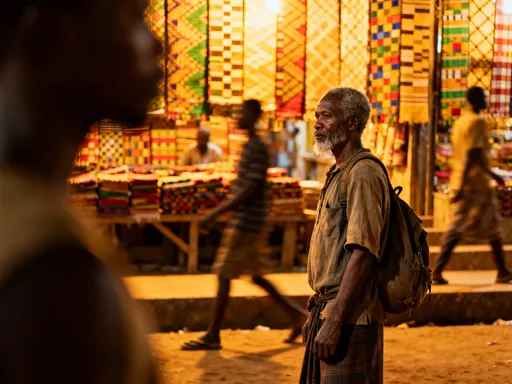
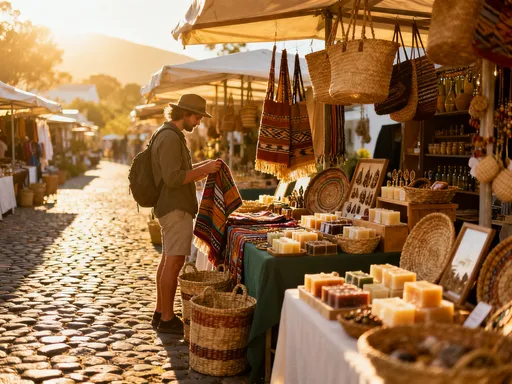
One of the best places to experience this cultural fabric is the Chamorro Village Night Market, held every Wednesday evening just outside the city core. Though technically in Hagåtña’s vicinity, it draws participants from across the island. The market is alive with music, dance, and the sizzle of food grills. Vendors sell handmade crafts, from shell jewelry to woven baskets, while elders share stories with younger generations. For visitors, the experience is immersive but never overwhelming. There is no pressure to buy or perform—only to be present. It is here that many travelers first understand that Guam’s culture is not a relic, but a living, breathing entity.
To see Hagåtña through local eyes is to recognize that beauty exists in function as much as in form. A weathered church pew, a hand-painted street sign, a child’s chalk drawing on the sidewalk—each carries meaning. These details do not photograph well, but they resonate deeply. They remind us that travel is not just about seeing new places, but about expanding our capacity to notice, to listen, to understand. In Hagåtña, the most profound views are not of the ocean or skyline, but of human connection unfolding in real time.
Offbeat Angles: Less-Traveled Paths with Maximum Impact
Beyond the main roads and official landmarks, Hagåtña reveals its most intimate charms in the spaces between—narrow lanes, forgotten alleys, and quiet residential corners. These are the places where tourism fades and authenticity deepens. One such path runs behind the old legislative building, where a row of pastel-colored homes leans toward the sea. Bougainvillea spills over iron fences, and laundry flutters on lines like improvised flags. A single bench, shaded by a mango tree, offers a seat with no view but the sky—yet somehow, it feels like the best spot in the city.
Walking these lesser-known routes requires no map, only patience. The reward is in the details: the texture of coral stone walls, the play of light on wet pavement after a brief rain, the reflection of clouds in a puddle beside the road. Some walls bear murals—faded but meaningful—depicting Chamorro legends or scenes of village life. Others are adorned with simple hand-lettered signs: “Beware of Dog,” “No Parking,” “God Bless This Home.” These are not curated for visitors; they are the real annotations of daily existence.
The best time to explore these offbeat paths is mid-morning, when the heat is rising but not yet oppressive, and residents are out tending gardens or washing cars. A slow pace is essential—not to cover ground, but to absorb atmosphere. Turning a corner without expectation often leads to unexpected discoveries: a hidden garden, a child’s tricycle abandoned in the grass, the scent of pandan baking in a nearby kitchen. These moments are fleeting, unrepeatable, and profoundly human.
For the mindful traveler, these quiet streets offer a different kind of adventure—one defined not by distance, but by depth. There are no admission fees, no crowds, no schedules. Just the simple act of being present. In a world where travel is often about checking boxes, Hagåtña’s side streets remind us that some of the most meaningful experiences come from wandering without purpose. They teach the value of curiosity, of noticing the unnoticed, of finding wonder in the ordinary.
Day-to-Night Transformation: Two Sides of the Same City
As daylight fades, Hagåtña undergoes a subtle but striking transformation. The sharp edges of buildings soften under the dim glow of streetlights. The heat lifts, replaced by a gentle ocean breeze. The city, so vivid in the sun, becomes more introspective at night—a place of whispers rather than declarations. Traffic thins, voices lower, and the rhythm slows to a near-hush. This is not a city that stays awake late, but one that finds peace in quiet.
The waterfront at night is particularly enchanting. Paseo de Susana, bustling in the afternoon, becomes a sanctuary of stillness. The bay, now dark, reflects the scattered lights of passing boats and distant shorelines. Fireflies flicker in the trees, and the occasional splash suggests a fish breaking the surface. Benches that were occupied earlier now sit empty, waiting for solitary thinkers or couples sharing quiet conversation. It is a place for reflection, not activity—a rare urban space where solitude is not loneliness, but a gift.
Safe and walkable areas, such as the stretch between the cathedral and the Governor’s Complex, remain accessible after dark. Streetlights, though not abundant, provide enough illumination for cautious strolling. The absence of bright commercial signage enhances the sense of calm. Sounds become more pronounced: the rustle of leaves, the distant hum of a generator, the soft chime of a windcatcher. In the darkness, the city reveals a different kind of beauty—one defined by absence as much as presence.
For photographers, the transition from day to night offers a unique challenge and reward. Capturing the shift requires patience and a steady hand. A tripod, even a small one, helps stabilize long exposures. But beyond technique, the night invites a different mindset: one of receptivity rather than capture. The goal is not to freeze a moment, but to absorb it. In Hagåtña, the night does not hide the city—it reveals another layer of its soul.
Why Perspective Matters: How Hagåtña Changes the Way You See Guam
Leaving Hagåtña after several days, the view from the highway felt different. The same palm trees, the same blue water—they were unchanged, yet seen anew. This shift was not in the landscape, but in the eye of the beholder. What began as a simple visit had become a reorientation: a move from tourist gaze to thoughtful witness. Hagåtña does not dazzle; it deepens. It does not shout; it whispers truths that linger long after departure.
The hidden views of Hagåtña are not merely physical. They are shifts in understanding—moments when a city’s history, culture, and spirit align in a single glance. Whether from a bluff overlooking the bay, a quiet alley at dawn, or a park bench beneath a starry sky, these perspectives accumulate into a fuller picture of Guam. They challenge the notion that travel is about collecting destinations, proposing instead that it is about cultivating awareness.
Every traveler carries assumptions. Many come to Guam expecting beaches and resorts—and they find them. But those who venture into Hagåtña discover something else: a capital that resists simplification, a community that values dignity over display, a culture that endures with quiet strength. To see this is to see beyond the postcard. It is to recognize that true beauty often lies beneath the surface, waiting for those willing to look closely.
So the next time you plan a journey—not just to Guam, but anywhere—consider starting not with the obvious, but with the overlooked. Seek the quiet capital, the side street, the early morning light on an ordinary wall. Let your expectations be challenged. Allow yourself to be surprised. Because the most unforgettable views are not always the grandest—they are the ones that change how you see the world.