You Won’t Believe What Halifax’s Streets Are Hiding
Wandering through Halifax feels like flipping through a living architecture book—each building tells a story, blending maritime grit with unexpected elegance. I never expected this coastal city to surprise me with such bold designs, from centuries-old stone forts to sleek modern hubs. The way history and innovation collide here is absolutely mind-blowing. If you think Canada’s Atlantic coast is all fishing villages and lighthouses, think again—this city’s skyline whispers secrets of resilience, creativity, and identity. Every street corner offers a quiet revelation, not through grand spectacle, but through thoughtful layering of time, material, and purpose. For travelers who appreciate depth over dazzle, Halifax is a quiet masterpiece waiting to be understood.
First Impressions: Stepping Into a City That Defies Expectations
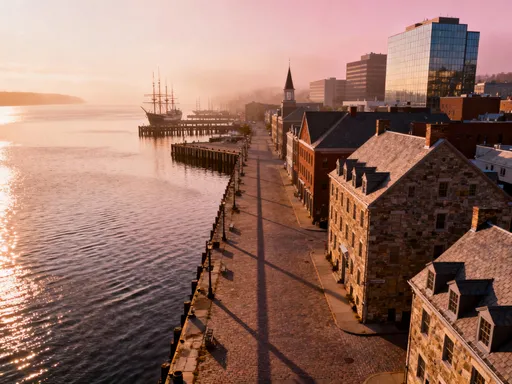
Arriving in downtown Halifax, one is immediately struck not by size, but by presence. The city does not shout; it speaks in measured tones, its rhythm set by the tides and the footsteps of generations. Unlike the glass-and-steel skylines of Toronto or Vancouver, Halifax offers a more intimate dialogue between the built environment and its natural setting. The waterfront boardwalk, stretching along the harbor, invites slow exploration—where fishing boats bob beside pleasure craft, and the salt-kissed breeze carries the scent of the sea. Here, architecture doesn’t dominate the landscape; it converses with it.
The first architectural contrast emerges quickly: Georgian-style row houses with symmetrical windows and brick facades stand shoulder-to-shoulder with contemporary glass-fronted buildings. This is not haphazard urban development, but a deliberate curation of identity. The city’s planners and architects have long embraced a philosophy of continuity rather than replacement. A 19th-century warehouse might now house a boutique hotel, its original timber beams exposed as design features. A former customs building could be repurposed into a cultural center, its stone walls retaining the patina of time. These transitions feel natural, even respectful, as if the city is honoring its past while stepping confidently into the future.
What sets Halifax apart is its refusal to conform to expectations. Visitors anticipating a sleepy maritime town are met with a vibrant urban core where design thinking is woven into everyday spaces. Public plazas incorporate historic elements—like preserved cobblestones or anchor markers—into modern landscaping. Street furniture, lighting, and signage are carefully chosen to complement rather than compete with the surroundings. This attention to detail signals a deeper value: that beauty and function can coexist, and that a city’s character is built not in moments of revolution, but in the quiet accumulation of thoughtful choices.
The Heart of Heritage: Exploring 18th and 19th-Century Foundations
At the center of Halifax’s architectural narrative stands the Halifax Citadel National Historic Site, a star-shaped fort perched atop Citadel Hill. Constructed in the mid-19th century, though occupying a military site since 1749, the fortress is a testament to both strategic necessity and enduring craftsmanship. Built from local sandstone, its thick walls and sloping earthworks were designed to withstand artillery fire, but today they serve as a monument to the city’s foundational role in British North America. The Citadel is not a relic frozen in time; it is a living museum where reenactments, guided tours, and seasonal events bring history into tangible experience.
Equally significant, though quieter in demeanor, is St. Paul’s Church, located just a short walk from the harbor. Consecrated in 1750, it holds the distinction of being the oldest Protestant church in Canada. Its simple Georgian design—white clapboard exterior, symmetrical windows, and a modest steeple—reflects the aesthetic values of order, proportion, and restraint. Inside, the wooden pews and original chandeliers evoke a sense of continuity, as if the echoes of centuries of sermons still linger in the rafters. St. Paul’s has witnessed wars, fires, and the Halifax Explosion of 1917, yet it remains standing, a symbol of resilience and spiritual constancy.
These early structures were not merely functional; they were expressions of power, faith, and civic ambition. The use of durable materials like sandstone and brick was practical, yes, but also symbolic—conveying permanence in a region shaped by the volatility of the sea and colonial politics. The military precision of the Citadel’s layout, with its geometric bastions and clear lines of sight, mirrored the hierarchical order of the British Empire. Meanwhile, the orderly rows of Georgian homes in the downtown core reflected an ideal of rational urban planning, where symmetry and balance were believed to foster social harmony.
What is remarkable is how these 18th and 19th-century designs continue to influence the city’s aesthetic. Modern buildings often echo the scale and proportion of their historic neighbors, avoiding the jarring contrasts that can plague other revitalized urban centers. This architectural sensitivity ensures that Halifax does not feel like a city divided between old and new, but one where each era contributes to a cohesive whole.
Maritime Influence: How the Sea Shaped the Skyline
The Atlantic Ocean is not just a backdrop in Halifax—it is a defining force. The city’s architecture bears the imprint of its maritime identity, from the orientation of buildings to the materials used in their construction. Salt air, high winds, and the constant presence of water have dictated durability and design for centuries. Early warehouses along the waterfront were built with thick brick walls and heavy timber framing to withstand the elements and support the weight of cargo. Their large, multi-paned windows allowed natural light into storage spaces, while their proximity to the docks enabled efficient loading and unloading of ships.
Today, many of these warehouses have been transformed into the Historic Properties district, a vibrant stretch of shops, restaurants, and galleries that retains the industrial character of its past. Walking through this area, one can still see the original loading doors, iron railings, and exposed brickwork that speak to its working-class origins. The adaptive reuse of these structures is more than a preservation effort; it is a celebration of the city’s mercantile history. A former rum warehouse might now house a seafood bistro, its cellar still cool and damp, perfect for storing wine. A tobacco storage building could be converted into an art studio, its high ceilings ideal for natural light.
The influence of the sea extends beyond materials and form. The rhythm of tides, the patterns of trade, and the seasonal cycles of fishing have all shaped the way Halifax grows. The waterfront promenade, for instance, is designed to accommodate both pedestrian flow and maritime activity. Benches face the harbor, inviting contemplation of the water, while interpretive panels tell stories of shipbuilding, immigration, and naval history. Even the color palette of the city—navy blues, weathered grays, and deep reds—echoes the hues of the ocean, the sky, and the fishing boats that have long defined this port.
Modern waterfront developments have carefully balanced preservation with innovation. New constructions are set back from the edge, allowing uninterrupted views of the harbor, and height restrictions ensure that historic buildings remain visually dominant. Sustainable design practices, such as rainwater harvesting and energy-efficient glazing, are increasingly common, reflecting a commitment to environmental stewardship that honors the sea rather than exploits it. In this way, Halifax’s architecture continues to evolve in dialogue with its maritime soul.
Reinventing the Old: Adaptive Reuse and Urban Revival
Halifax has become a national leader in adaptive reuse—the practice of repurposing historic buildings for new functions while preserving their architectural integrity. This approach is not merely about aesthetics; it is a strategy for sustainable urban development, cultural preservation, and community engagement. By choosing renovation over demolition, the city reduces waste, conserves energy, and maintains the unique character that distinguishes it from generic urban landscapes.
One powerful example is the Black Cultural Centre for Nova Scotia, located in Cherry Brook. Housed in a former school building, the center serves as a repository of African Nova Scotian history, art, and heritage. The renovation respected the original structure’s layout while introducing modern gallery spaces, educational facilities, and archival storage. The result is a space that honors the past both architecturally and thematically—where the walls themselves seem to bear witness to generations of resilience and contribution.
Another standout is the Maritime Centre, once a 1980s office tower that has been integrated into a larger mixed-use development. Rather than tearing it down, architects worked with the existing framework, updating its façade, improving energy efficiency, and connecting it to new residential and retail spaces. This project exemplifies how even less iconic buildings from recent decades can be reimagined as part of a sustainable urban fabric. It also reflects a broader shift in thinking: that value lies not only in grand historic landmarks, but in the everyday structures that shape community life.
The city’s policies support this ethos. Incentives for heritage restoration, flexible zoning regulations, and partnerships between public and private sectors have made adaptive reuse not just feasible, but financially viable. Developers are encouraged to retain original features—such as staircases, flooring, and window details—while upgrading for modern use. This approach fosters a sense of continuity, where new residents and businesses become stewards of history rather than disruptors of it. The result is neighborhoods that feel lived-in, layered, and authentic.
Modern Statements: Bold Contemporary Designs
While deeply rooted in history, Halifax is not a city frozen in time. Its contemporary architecture demonstrates a willingness to innovate, experiment, and engage in architectural dialogue. The Nova Scotia College of Art and Design (NSCAD) University’s Academy Building is a prime example. Housed in a restored 19th-century warehouse, the structure also features a striking glass atrium that floods the interior with natural light. The contrast between the heavy masonry exterior and the transparent, minimalist addition is intentional—a visual metaphor for the intersection of tradition and creativity.
Similarly, the Keshen Goodman Public Library in Dartmouth stands as a model of modern civic design. More than just a repository for books, it is a community hub designed for connection, learning, and well-being. Its expansive glass walls blur the boundary between inside and outside, while a soaring atrium filled with natural light creates an uplifting atmosphere. Sustainable features—such as geothermal heating, green roofs, and energy-efficient lighting—underscore a commitment to environmental responsibility. The library has become a destination in its own right, attracting visitors not only for its collections but for its architectural beauty.
Other contemporary projects, such as the redevelopment of the Cunard Building and the new Dalhousie University campuses, reflect a design philosophy that values transparency, accessibility, and integration with the public realm. These buildings do not seek to overpower their surroundings; instead, they invite interaction. Public plazas, open staircases, and ground-floor cafes encourage people to linger, fostering a sense of ownership and belonging. In this way, modern architecture in Halifax is not about making bold statements for their own sake, but about creating spaces that serve and inspire the community.
The success of these projects lies in their contextual sensitivity. Architects do not treat Halifax as a blank canvas, but as a layered city with a rich narrative. Even the most modern designs respond to scale, materiality, and orientation, ensuring that innovation enhances rather than erases history. This balance is what makes Halifax’s skyline so compelling—it is not a clash of eras, but a conversation across time.
Hidden Layers: Neighborhoods Beyond Downtown
To understand Halifax fully, one must venture beyond the downtown core and explore its residential neighborhoods, each with its own architectural identity and story. Hydrostone, for instance, is a unique district born out of tragedy. Rebuilt after the devastating Halifax Explosion of 1917—the largest man-made explosion before the atomic bomb—it was one of Canada’s first planned communities. Designed with input from British planners, it features uniform brick homes with gabled roofs, front porches, and tree-lined streets laid out in a grid pattern. The use of reinforced concrete in some structures was revolutionary at the time, reflecting both a desire for safety and a vision for modern urban living.
Today, Hydrostone retains its distinctive character, with many homes carefully maintained or restored. The neighborhood’s central market, housed in a historic building, has become a community anchor, offering fresh produce, baked goods, and artisanal crafts. Walking through Hydrostone, one senses a deep pride in place—a collective memory embedded in brick and mortar. It is a testament to how architecture can aid recovery, providing not just shelter, but stability and dignity after catastrophe.
Across the harbor in Dartmouth, the skyline is quietly evolving. Once seen as Halifax’s quieter counterpart, Dartmouth is embracing architectural experimentation through projects like the aforementioned Keshen Goodman Library and the redevelopment of the Shubenacadie Canal area. New residential buildings incorporate nautical motifs, green spaces, and mixed-use designs that encourage walkability. The ferry connection between Halifax and Dartmouth is more than a transit route; it is a symbolic and physical link between two communities with shared history but distinct identities.
Other neighborhoods, such as the South End and Fairview, showcase a mix of Victorian homes, mid-century bungalows, and infill developments that reflect changing lifestyles and housing needs. Here, preservation efforts coexist with sustainable upgrades—such as energy-efficient windows, solar panels, and rain gardens—demonstrating that heritage and modernity can thrive together. These neighborhoods reveal that Halifax’s architectural richness is not confined to postcard views, but lives in the everyday spaces where people work, live, and grow.
Why Architecture Matters: Shaping Identity and Experience
Architecture in Halifax is more than bricks and mortar; it is a living record of who the city has been and who it aspires to be. Every building, from the grand Citadel to the humble row house, carries layers of meaning—of survival, adaptation, and community. The city’s skyline is not a static display, but a dynamic narrative shaped by natural forces, human decisions, and cultural values. To walk through Halifax is to engage with this story, to see how resilience is built into the very fabric of its streets.
For visitors, this means looking beyond surface beauty. It means noticing the way a restored warehouse window aligns with a modern storefront, or how a centuries-old church stands beside a bustling café. It means understanding that the materials used—stone, brick, timber—are not just practical choices, but expressions of identity shaped by geography and history. When travelers take the time to observe these details, they move from passive sightseeing to active connection.
Halifax teaches a quiet but powerful lesson: that cities thrive not by erasing the past, but by integrating it into the present. Its architecture invites reflection on continuity, sustainability, and belonging. It reminds us that homes, public spaces, and institutions are not just functional—they are emotional anchors, repositories of memory, and canvases for the future. In a world where so much feels transient, Halifax stands as a model of thoughtful, intentional growth.
So the next time you find yourself strolling along the waterfront or turning down a quiet residential street, pause. Look closely. Listen. The buildings are speaking. They tell stories of storms weathered, communities built, and identities forged. And in their quiet strength, they offer something rare: a sense of place that is both enduring and ever-evolving. Halifax doesn’t need to shout to be heard. Its streets are already whispering—will you listen?