You Won’t Believe What I Found in Kathmandu’s Hidden Alleys
Wandering through Kathmandu, I stumbled upon something extraordinary—centuries-old temples tucked between bustling streets, wooden windows carved like lace, and courtyards whispering stories of forgotten dynasties. This city isn’t just about pilgrimage or trekking prep—it’s a living museum of unique architecture. The way buildings blend Hindu, Buddhist, and Newari styles blew my mind. Every alley holds a surprise, and every detail feels intentional. If you think you’ve seen it all, Kathmandu will prove you wrong.
First Glimpse: Arriving in Kathmandu with No Expectations
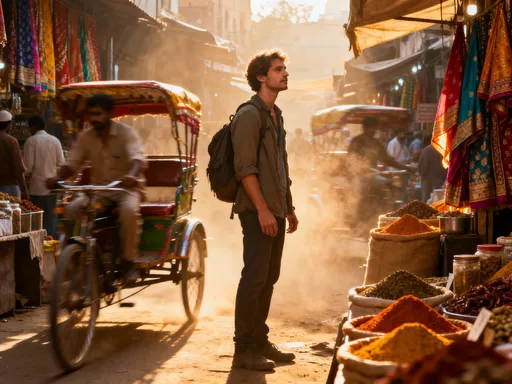
The first breath of Kathmandu hits like a warm gust from another century. The air hums with the sound of motorbikes weaving through narrow lanes, rickshaws creaking past spice-scented stalls, and the occasional chime of temple bells carried on the breeze. Incense curls from doorways and open shrines, wrapping the city in a sacred haze. For many travelers, Kathmandu is a stopover—a place to stock up on trekking gear before heading into the Himalayas. But arriving without a fixed itinerary, without the pressure to move on, reveals a different truth: this is a city that rewards slowness, curiosity, and wandering.
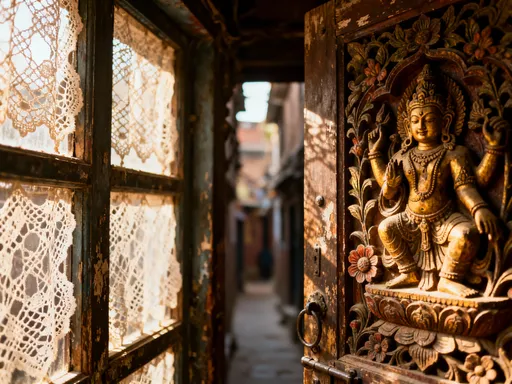
It was a wrong turn, really, that changed everything. Seeking a quiet tea house away from Thamel’s tourist bustle, I followed a narrow alley that curved like a secret passage. The noise faded slightly, replaced by the soft echo of footsteps on stone and the rustle of prayer flags above. And then—suddenly—there it was: a hidden courtyard, tucked between two weathered brick buildings, its entrance framed by wooden struts carved with dancing goddesses and coiled serpents. The craftsmanship was astonishing—every beam, every lintel, every window pane shaped by hand, not machine. I stood frozen, realizing that I had just stepped into a world most visitors never see.
This moment crystallized a truth about Kathmandu: its greatest treasures are not always marked on maps. The city’s essence lives in these in-between spaces—alleyways too narrow for cars, staircases leading nowhere obvious, doorways that open into centuries of history. Unlike the curated serenity of a museum, Kathmandu’s heritage is lived in, touched, worn smooth by daily use. And yet, despite the chaos of modern urban life, these ancient structures remain standing, not as relics, but as active parts of the city’s rhythm.
The Heart of the City: Exploring Durbar Square’s Living Heritage
No visit to Kathmandu is complete without walking through Kathmandu Durbar Square, a UNESCO World Heritage Site that serves as the historic and cultural nucleus of the city. Laid out over centuries by the Malla kings, this sprawling complex of palaces, temples, and plazas is a masterclass in architectural harmony. Here, religion, governance, and daily life once converged—and still do, in many ways. The square is not a frozen monument but a living space where pigeons flutter around golden spires, children play near stone lions, and vendors sell marigolds beside 17th-century carvings.
One of the most compelling structures is Kasthamandap, a wooden pavilion believed to have given Kathmandu its name. Built entirely without nails from a single sal tree, it once served as a community meeting hall and shelter for travelers. Though damaged in the 2015 earthquakes, its partial reconstruction stands as a symbol of resilience. Nearby, the towering Taleju Temple rises in the classic Nepali pagoda style, its red spire capped with gold, accessible only to priests during the annual festival when its doors open to the public. The contrast between sacred exclusivity and public accessibility defines much of Kathmandu’s spiritual landscape.
What makes Durbar Square truly special is how seamlessly the ancient and the everyday coexist. A tailor stitches clothes beneath a centuries-old stone relief of a deity. A smartphone repair shop operates in a building with intricately carved wooden windows. These juxtapositions are not jarring—they feel natural, as if time in Kathmandu moves in layers, not lines. The square is not preserved behind glass; it is used, loved, and maintained by those who live around it. This continuity is rare in the modern world, where heritage sites often become isolated from the communities they once served.
Newari Craftsmanship: When Wood, Brick, and Stone Tell Stories
The architectural soul of Kathmandu belongs to the Newar people, the indigenous inhabitants of the Kathmandu Valley, whose artistry has shaped the city for over a thousand years. Renowned as master builders and craftsmen, the Newars developed a distinctive architectural language that blends aesthetics, spirituality, and practicality. Their legacy is visible in every carved window, every tiled roof, every brick laid with intention. Walking through the older neighborhoods of Patan and Bhaktapur, one enters a world where wood, brick, and stone are not just materials but storytellers.
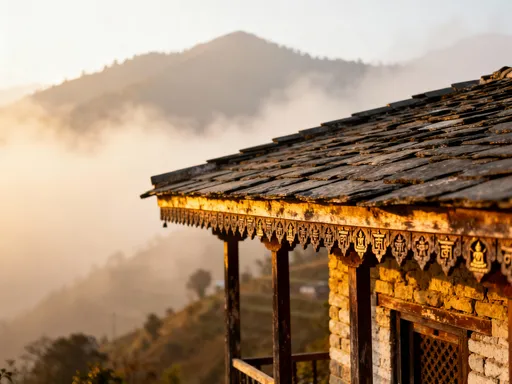
Perhaps the most iconic feature of Newari architecture is the intricately carved wooden strut—known as *tunal*—which supports the overhanging eaves of temples and homes. These struts often depict gods, goddesses, or mythical creatures, each figure hand-chiseled with astonishing detail. A single temple might have dozens of these, each unique, each a silent sermon in wood. The multi-tiered roofs, another hallmark, are not just decorative; they serve to channel monsoon rains away while symbolizing the layers of the cosmos in Buddhist and Hindu cosmology.
The facades of Newari buildings are typically made of sun-dried brick, laid in patterns that allow airflow and light, while the windows are small and latticed, offering privacy and protection from the elements. Inside, courtyards—known as *bahals*—serve as private sanctuaries, often centered around a water spout or shrine. In Bhaktapur’s Taumadhi Square, the Vatsala Temple, though partially ruined, still showcases the precision of Newari masonry, with its stone walls fitted so tightly that not even a blade can slip between them. These are not just buildings; they are testaments to a culture that saw craftsmanship as an act of devotion.
Spirit in the Structure: How Religion Shapes Design
In Kathmandu, architecture is never merely functional—it is deeply spiritual. Every line, every angle, every ornament serves a purpose beyond beauty. The city’s design reflects a worldview in which the sacred and the mundane are inseparable. Hindu and Buddhist beliefs have shaped the layout, orientation, and symbolism of buildings for centuries, creating a landscape that feels both grounded and transcendent.
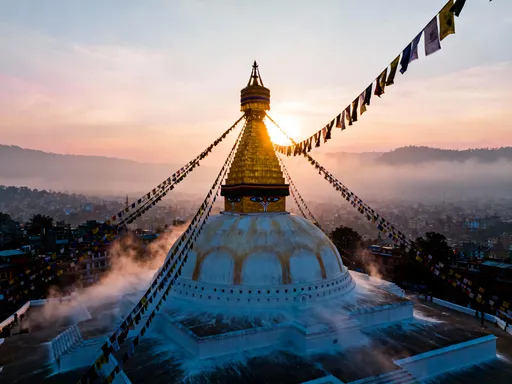
Take, for example, the pagoda style, which dominates many of the city’s temples. Originating in Nepal and later spreading to East Asia, this design features tiered roofs that rise toward the sky, symbolizing the ascent from the earthly realm to enlightenment. The Swayambhunath Stupa, perched on a hill west of the city, is a perfect embodiment of this philosophy. Its dome represents the universe, the spire the axis of the world, and the eyes painted on all four sides the all-seeing wisdom of the Buddha. Pilgrims circumambulate the stupa clockwise, following a path that mirrors the spiritual journey.
Even private homes reflect this integration of faith and form. Many traditional houses include a small prayer room, often located on the top floor where light and air are purest. Doorways are adorned with religious symbols, and the placement of rooms follows Vastu Shastra principles, an ancient system of spatial harmony. In some neighborhoods, it’s common to see families performing morning rituals at household shrines, their prayers mingling with the sounds of breakfast being prepared. This seamless blend of worship and daily life gives Kathmandu its unique spiritual texture—a city where holiness is not confined to temples but flows through the very walls of homes.
Beyond the Temples: Urban Fabric That Breathes History
While the grand temples draw the most attention, Kathmandu’s true architectural richness lies in its everyday structures—those humble, functional spaces that have served the community for generations. These include the *dhunge dharas*, or stone water spouts, which once provided drinking water to entire neighborhoods. Carved in the shape of makaras (mythical creatures) or deities, these spouts are not only practical but also sacred, believed to channel divine blessings through water. Though many have fallen into disrepair, efforts to restore them are underway, recognizing their cultural and historical value.
Another vital element is the *sattal*, a two-story public rest house with an open ground floor where travelers, elders, and monks could rest. These structures, often located at crossroads or near temples, were centers of social life, fostering connection and hospitality. Similarly, the *bahals*—courtyard complexes originally built as monastic residences—continue to serve as communal spaces where families gather, children play, and festivals are celebrated. These spaces are not grand, but they are essential, forming the connective tissue of Kathmandu’s urban fabric.
Yet, modernization poses challenges. As concrete buildings rise and traffic increases, some of these traditional spaces are being replaced or neglected. In certain areas, historic courtyards have been converted into parking lots or commercial spaces, eroding the city’s character. However, there is also hope. Local organizations and residents are increasingly advocating for the preservation of these everyday heritage sites, recognizing that a city’s soul lies not only in its monuments but in the spaces where people live, rest, and connect.
Walking the Hidden Paths: Off-the-Beaten-Track Architectural Gems
For those willing to stray from the main squares, Kathmandu offers quieter, more intimate architectural wonders. One such gem is the Krishna Temple in Patan Durbar Square, a stone masterpiece modeled after India’s Dwarka temple. Built in the 17th century, its walls are covered in intricate carvings depicting scenes from the Mahabharata, each figure frozen in dramatic motion. Unlike the more frequented temples, this site often has few visitors, allowing for quiet contemplation of its artistry.
Even smaller, but no less meaningful, are the tiny shrines tucked into niches along alley walls—some no larger than a shoebox, yet tended with care. The Mahalaxmi Temple in a narrow lane of Bhaktapur is one such example, its entrance marked only by a red cloth and a few oil lamps. These micro-temples remind visitors that spirituality in Kathmandu is not about scale but about presence. They are maintained by local families, their doors opened only on special days, their existence a quiet testament to enduring faith.
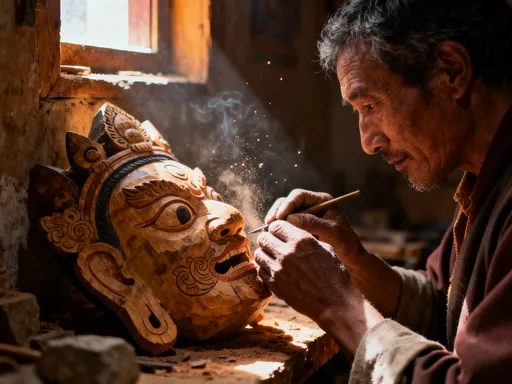
The value of discovering these places lies not just in seeing them, but in the act of searching. Slow walking, talking to locals, accepting an unexpected invitation for tea—these are the keys to unlocking Kathmandu’s deeper layers. It’s in these moments that travel becomes transformation. A weathered lion guarding a doorway may smile with age and wear, its stone eyes softened by time. A carpenter shaping a new wooden strut may pause to explain the meaning behind the carving. These encounters make the architecture personal, turning sightseeing into storytelling.
Preservation in Progress: Challenges and Hopes for the Future
The survival of Kathmandu’s architectural heritage is not guaranteed. The 2015 earthquakes caused widespread damage, collapsing centuries-old temples and weakening countless structures. While international aid and local efforts have led to significant restoration work, the process is slow, expensive, and technically complex. Rebuilding with traditional materials and techniques requires skilled artisans—many of whom are aging, with fewer young people taking up the craft.
Urban development adds another layer of pressure. As Kathmandu’s population grows, demand for housing and infrastructure increases, often at the expense of historic neighborhoods. Unplanned construction, poor drainage, and pollution threaten the integrity of ancient buildings. In some cases, heritage sites are surrounded by haphazard concrete structures, disrupting the visual and cultural continuity of the cityscape.
Yet, there is reason for hope. Organizations like Kathmandu Valley Preservation Trust and UNESCO are working with local communities to restore key sites using traditional methods. Training programs are helping to pass on Newari craftsmanship to a new generation. At the same time, a growing awareness among residents and visitors alike is fostering a culture of stewardship. People are beginning to see that preserving old buildings is not about freezing the past, but about honoring identity, sustainability, and beauty in the present.
Responsible tourism plays a crucial role. Travelers who seek out lesser-known sites, support local guides, and respect sacred spaces contribute to a model of visitation that values depth over speed. When tourism supports preservation rather than exploitation, it becomes a force for good. Kathmandu’s architecture is not just Nepal’s heritage—it is part of humanity’s shared legacy. Its survival matters not only for Nepalis but for anyone who believes that cities should carry memory, meaning, and soul.
Kathmandu’s buildings aren’t relics—they’re breathing, evolving parts of daily life. From grand temples to humble doorways, each piece of architecture carries memory, faith, and identity. To walk its streets is to witness a civilization that honors the past while moving forward. This city doesn’t just invite your gaze—it demands your attention. And once you see it, you’ll never look at urban heritage the same way again.