You Won’t Believe What I Found in Paro’s Hidden Markets
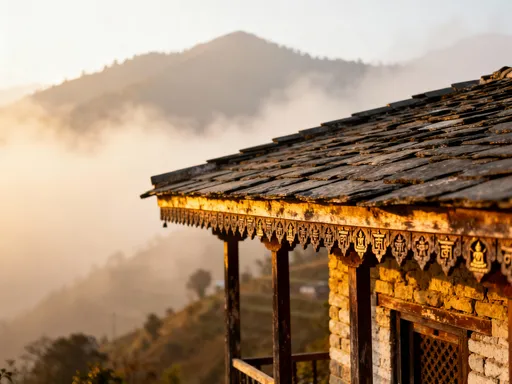
Nestled in the misty valleys of the Himalayas, Paro, Bhutan, is more than just a gateway to ancient monasteries and prayer flags. It’s a treasure chest of handmade wonders most travelers never see. I stumbled upon local artisans crafting goods that tell stories older than time—each piece alive with culture. If you think Bhutan is just about dzongs and dragon flags, wait until you discover what’s quietly being made behind temple walls. This is travel with soul—and the souvenirs? Absolute magic. What you find here isn’t sold on every corner or displayed under bright lights. It lives in quiet courtyards, behind wooden shutters, in the hands of men and women who measure progress not in profit, but in precision, patience, and purpose. This journey into Paro’s hidden markets is not just about discovery—it’s about connection, respect, and the rare privilege of witnessing art that breathes.
Arrival in Paro: First Impressions That Hide a Deeper Story
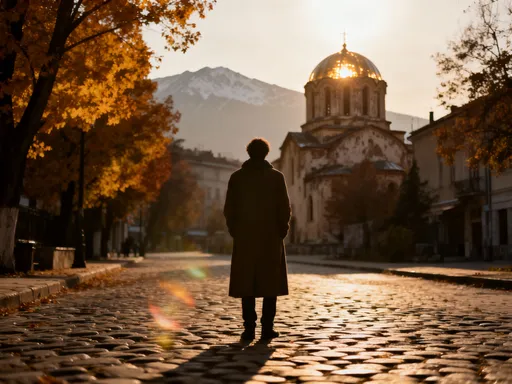
The first glimpse of Paro unfolds like a revelation. As the plane descends toward Paro International Airport—one of the most dramatic landings in the world—the aircraft weaves between emerald peaks, revealing a valley cupped gently by the Himalayas. On clear days, the snow-dusted ridges glow under a sky so blue it seems painted. The air, crisp and thin, carries a scent of pine and earth, instantly calming the mind. For many visitors, this moment marks the beginning of a spiritual journey, one often centered on Bhutan’s iconic Tiger’s Nest Monastery, perched impossibly on a cliff face.
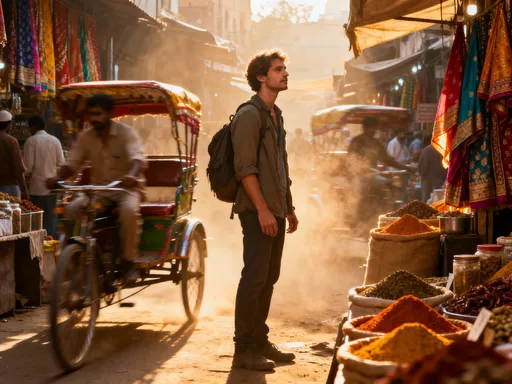
Yet beyond the postcard views and sacred trails lies a quieter, less visible rhythm—one that pulses in the alleyways near the Paro Weekend Market. While tourists board buses to hike to Taktsang, locals move through narrow lanes lined with wooden stalls, their baskets filled with red rice, hand-ground spices, and bundles of fresh herbs. It is here, just beyond the main square, that the true heartbeat of Paro reveals itself: not in grand monuments, but in the everyday craftsmanship passed from one generation to the next.
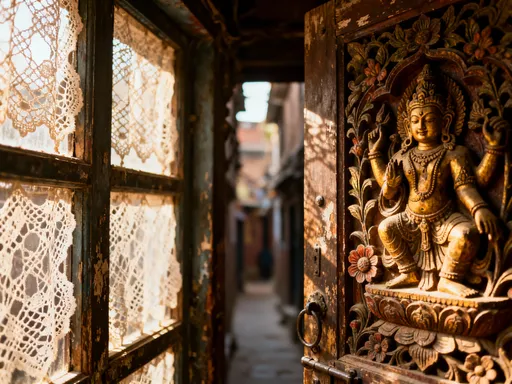
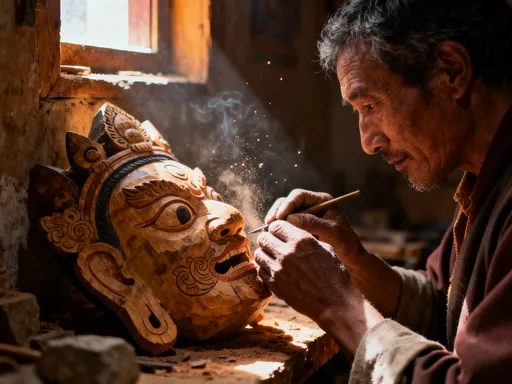
These hidden corners are not marked on most tourist maps. There are no banners, no loud vendors, no souvenir kiosks selling mass-produced trinkets. Instead, small workshops operate in modest homes, their doors slightly ajar, revealing glimpses of artisans at work. A woman bends over a loom, her fingers moving with quiet precision. An elderly man carves intricate patterns into a wooden mask, each stroke guided by memory and tradition. This is not performance for tourists—it is life as it has been lived for centuries. The contrast between the well-trodden path and these unseen spaces could not be starker, and it is in this contrast that the real story of Paro begins to unfold.
The Art of Slow Making: Why Bhutanese Craftsmanship Stands Apart
In a world that celebrates speed, efficiency, and convenience, Bhutan’s approach to craftsmanship feels like a quiet rebellion. Here, making is not about output or deadlines. It is about presence, intention, and spiritual alignment. Rooted deeply in Buddhist philosophy, the creation of art and craft is seen not as mere labor, but as a form of meditation, a way of honoring both the material and the maker. Every thread woven, every stroke carved, is done with mindfulness, often accompanied by silent prayers or chants passed down through families.
What sets Bhutanese craftsmanship apart is not just the skill involved, but the values that underpin it. Materials are sourced with respect for nature—wood from sustainably managed forests, dyes from plants like indigo and madder root, paper made from the bark of the daphne tree, which regenerates after harvesting. There is no waste, no excess. Even mistakes are not discarded but incorporated, reflecting the Buddhist belief in imperfection as part of life’s beauty.
Take the making of traditional thangka paintings, for example. These intricate religious artworks can take months to complete, with each color mixed by hand and each figure drawn according to sacred proportions. The artist must purify their mind before beginning, often fasting or meditating to maintain focus. Similarly, the crafting of ritual bells, or drilbu, involves precise metalwork passed down through generations of metalcasters. The sound they produce is not just musical—it is believed to purify space and awaken compassion.
Unlike factory-made souvenirs that flood tourist markets around the world, Bhutanese crafts carry soul. They are not designed for speed or mass appeal. They are made to last, to serve, and to connect. When you hold a hand-carved wooden bowl or a piece of handwoven fabric, you are not just touching an object—you are touching a lineage, a belief system, a way of life that refuses to be hurried.
Textiles That Speak: The Secret Language of Kira and Bura
In Bhutan, clothing is more than attire—it is identity, heritage, and storytelling woven into fabric. Nowhere is this more evident than in the traditional garments worn daily by Bhutanese men and women: the kira for women and the gho for men. In Paro, where rural traditions remain strong, many women still wear handwoven kiras made in their own homes or by village artisans. These garments are not purchased from stores but created with deep cultural significance, each pattern and color carrying meaning.
The kira is a long, rectangular piece of cloth wrapped around the body and fastened at the shoulders with silver brooches called koma. It is typically made from raw silk, cotton, or a blend, woven on backstrap looms that have changed little over centuries. The weaving process is slow and demanding, often taking weeks or even months to complete a single piece. The designs vary by region, with Paro known for its geometric motifs, floral patterns, and use of deep reds, blues, and golds—colors that symbolize prosperity, protection, and spiritual wisdom.
Equally significant is the bura, the fabric used to make the gho, the traditional knee-length robe worn by men. Like the kira, the bura is often handwoven, with stripes and checks being common. The weaving of these textiles is primarily done by women, who learn the craft from their mothers and grandmothers. In many households, the loom is a central fixture, as essential as the kitchen stove. The knowledge is not written down but passed orally and through practice, making each generation a guardian of a living tradition.
For the respectful traveler, observing this craft is a privilege. Some community centers and cultural hubs in Paro offer weaving demonstrations where visitors can watch artisans at work and even try a few simple techniques under guidance. It is important, however, to approach with humility—asking permission before photographing, listening more than speaking, and understanding that this is not entertainment but a sacred part of daily life. When you see a woman weaving, you are not just watching a craft—you are witnessing a language, one that speaks of family, faith, and continuity.
Hidden Workshops: Where Tradition Lives Off the Tourist Trail
A short walk from Paro’s main market, away from the clusters of tour groups and souvenir stalls, lies a network of quiet lanes where tradition thrives in near silence. These are not attractions advertised in guidebooks, but real places where artisans practice their crafts with little fanfare. One such workshop belongs to a family of mask makers, whose ancestors carved sacred dance masks for centuries. The scent of warm walnut wood fills the air as an elder craftsman shapes a mask representing a wrathful deity, his hands steady despite their age. Each mask is made for use in religious cham dances, never for display, and every detail—from the arch of the eyebrows to the curve of the lips—follows strict iconographic rules.
Not far away, in a small courtyard shaded by prayer flags, a papermaker sits cross-legged on the ground, pounding daphne bark into pulp. This handmade paper, known as deysho, is used for printing sacred texts, prayer wheels, and official documents. The process is labor-intensive: the bark is boiled, beaten by hand, and dried under the sun. What makes deysho special is its durability and resistance to insects—qualities that have preserved Bhutan’s written heritage for generations. Visitors who take the time to observe are often invited to try the pounding, feeling the rhythm of a craft that has outlasted empires.
Another hidden gem is a metal workshop where artisans cast bronze ritual bells and butter lamps using the lost-wax method, a technique unchanged for hundreds of years. The workshop is dimly lit, the air thick with the scent of molten metal. Here, apprentices learn by doing, starting with simple polishing tasks before mastering the complex art of mold-making and casting. The bells they produce are not decorative—they are consecrated and used in temples across the country.
What unites these workshops is their commitment to authenticity. There is no rush to produce for tourists. No shortcuts are taken. Visitors are welcome, but only if they come with respect. This means asking before entering, speaking softly, and understanding that these spaces are not performances but workplaces rooted in devotion. When you support these artisans—by purchasing a piece or simply bearing witness—you are not just buying a souvenir. You are helping keep a tradition alive.
What to Bring Home (And What to Leave Behind)
For many travelers, the question is not whether to bring something back from Paro, but what to choose. The answer lies not in price or size, but in meaning. The most valuable souvenirs are not the cheapest or the shiniest, but those made with care, by hand, using traditional methods. A handwoven zhora—a traditional apron worn with the kira—dyed with natural pigments, stitched with care, and designed with symbolic patterns, carries more value than any mass-produced trinket.
Knowing how to identify authentic craftsmanship is key. Look for irregularities—slight variations in weave, natural dye gradients, or hand-carved details. These are not flaws; they are signs of human touch. Avoid items that look too perfect or uniform, especially those sold near major tourist sites, where imported imitations are common. Genuine Bhutanese textiles will feel substantial, with a texture that speaks of quality fibers and skilled workmanship.
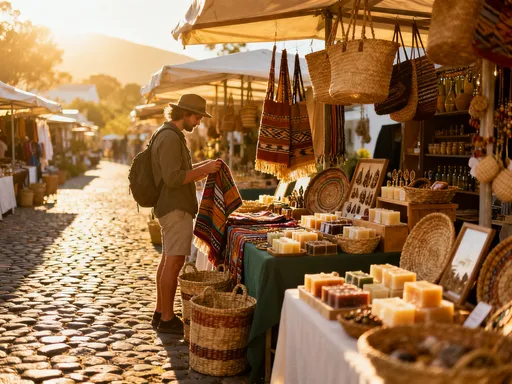
When purchasing, always buy directly from artisans or certified cooperatives. Many community-based tourism initiatives in Paro offer guided visits to craft workshops, where you can meet the makers, learn about their process, and buy with confidence. Prices may seem high compared to tourist market goods, but they reflect fair wages and sustainable practices. Remember, you are not just paying for an object—you are supporting a family, a tradition, and a way of life.
Packing your souvenirs also requires care. Handmade paper, wooden masks, and delicate textiles should be wrapped in soft cloth and placed in rigid containers to prevent damage. For larger items like woven textiles or bronze bells, consider shipping options through reputable local services. And always carry a small note or photo of the artisan if possible—this turns your souvenir into a story, one you can share with loved ones for years to come.
Beyond the Buy: How Your Choices Support Bhutan’s Future
Every purchase made in Bhutan carries weight. Unlike countries where tourism dollars often flow to international chains or urban centers, Bhutan’s unique tourism model ensures that much of the revenue supports local communities. The government’s ‘High Value, Low Impact’ policy requires visitors to pay a daily tariff, a portion of which funds education, healthcare, and cultural preservation. When travelers choose to buy directly from artisans, they amplify this impact, creating a ripple effect that strengthens rural economies.
Studies by Bhutan’s National Tourism Council indicate that households engaged in craft production report higher levels of income stability and cultural pride. In Paro and surrounding villages, weaving, carving, and papermaking provide livelihoods that allow families to remain in their ancestral homes rather than migrate to cities in search of work. This is especially important for women, many of whom are the primary weavers and custodians of textile knowledge.
Supporting local crafts also helps preserve intangible cultural heritage—skills and knowledge that cannot be rebuilt once lost. UNESCO has recognized several Bhutanese traditions, including mask dancing and traditional medicine, as part of the world’s intangible heritage. By valuing and purchasing authentic crafts, travelers become allies in this preservation effort. They help ensure that the next generation grows up knowing how to weave a kira, carve a mask, or make sacred paper—not from books, but from lived experience.
Moreover, ethical tourism fosters mutual respect. When artisans see that their work is valued not as a curiosity but as a legitimate art form, it reinforces their dignity and confidence. Travelers, in turn, gain a deeper understanding of Bhutan not as a picturesque destination, but as a living culture with values worth honoring. This exchange—quiet, respectful, and reciprocal—is the true heart of sustainable travel.
The Real Souvenir: A Shift in Perspective
In the end, the most lasting gift from Paro is not something you can wrap or pack. It is a shift in how you see the world. Standing in a quiet workshop, watching an elder weaver guide thread through a loom, I felt a deep sense of awe—not just for the skill, but for the patience, the devotion, the quiet resilience it represents. In a time when everything feels disposable, here was something made to endure, not just in material, but in meaning.
Travel, at its best, is not about checking off landmarks or filling suitcases with mementos. It is about connection. It is about slowing down enough to notice the details—the sound of a hammer shaping a bell, the scent of bark turning into paper, the way a pattern in a textile tells a story of protection and hope. These moments do not shout; they whisper. But if you listen, they change you.
When you return home, the scarf you bought may fade, the wooden mask may gather dust. But the memory of seeing art made with soul—that stays. It reminds you that beauty does not have to be loud to be powerful. That tradition is not backward, but deeply wise. That there are still places where people make things not for profit, but for purpose.
So if you go to Paro, go beyond the monastery trails. Step into the alleyways. Knock gently on a workshop door. Smile, ask, and listen. Let the quiet makers teach you what no guidebook can. Because the greatest souvenir you can bring back is not an object, but the quiet certainty that in this fast-moving world, some things—some beautiful, handmade, soulful things—are still worth preserving.